
The DFW Commercial Roofing Challenge
Managing a commercial property in the Dallas-Fort Worth metroplex means contending with some of the most demanding weather conditions in the country. From the blistering summer sun and high UV exposure to sudden hailstorms and heavy spring rains, your roof is your first line of defense. For property owners with flat or low-slope roofs, two primary solutions often lead the conversation: TPO (Thermoplastic Polyolefin) and silicone coatings. Both offer distinct advantages for energy efficiency and leak protection, but understanding the differences is key to making a sound investment for your facility.
What is TPO Roofing?
TPO is a single-ply roofing membrane that has become one of the most popular choices for commercial buildings across North Texas. It is made of a blend of polypropylene and ethylene-propylene rubber. TPO is typically installed in large rolls and can be mechanically fastened, ballasted, or fully adhered to the roof deck. The seams are then heat-welded together to create a continuous, water-tight surface.
Benefits of TPO in North Texas
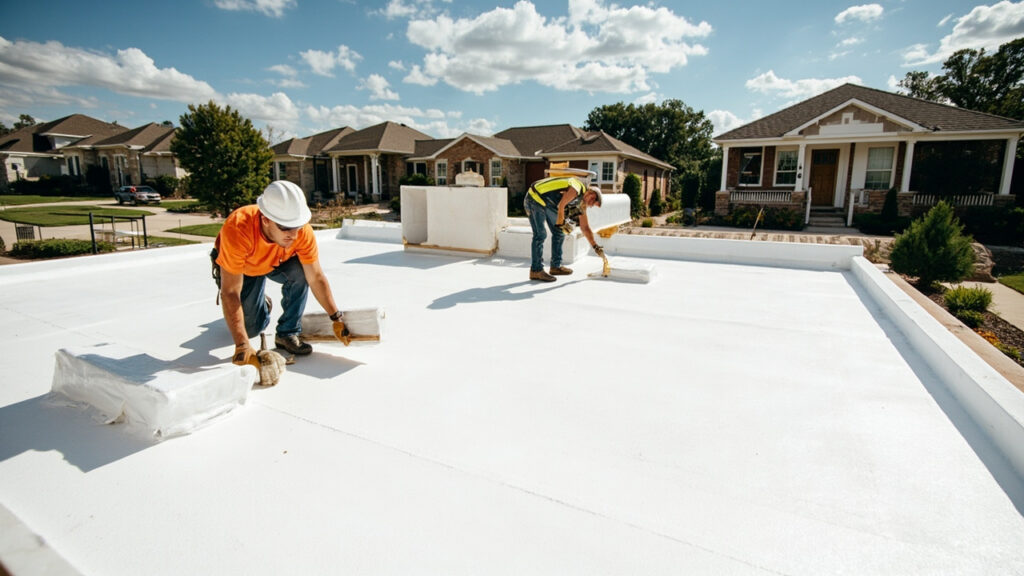
One of the primary reasons DFW business owners choose TPO roofing is its high reflectivity. Most TPO membranes are white, which helps reflect sunlight away from the building, significantly reducing cooling costs during our 100-degree summer days. Additionally, TPO is highly resistant to mold growth, punctures, and common chemicals that might settle on a commercial roof. Its flexibility allows it to handle the thermal expansion and contraction that occurs when Texas temperatures swing wildly between day and night.
What is a Silicone Commercial Flat Roof Coating?
A commercial flat roof coating, specifically a silicone-based system, is a fluid-applied restoration method. Rather than replacing the entire roof structure, a high-solids silicone liquid is applied over an existing roof surface (such as an older TPO, PVC, or modified bitumen roof). Once cured, it forms a seamless, rubber-like membrane that protects the underlying material from the elements.
When to Choose Silicone Restoration
Silicone coatings are an excellent choice for buildings where the existing roof is still structurally sound but is reaching the end of its initial lifespan. If your roof has minor leaks or surface degradation but the insulation underneath is dry, a silicone coating can extend the life of the roof by a decade or more without the cost and disruption of a full tear-off. It is a proactive way to maintain the building’s integrity while improving energy performance.
Comparing TPO and Silicone Coatings
When deciding between a new TPO installation and a silicone restoration, several factors come into play, including the current state of your roof, your budget, and your long-term goals for the property.
Reflectivity and Energy Efficiency
Both TPO and silicone coatings are considered “cool roof” technologies. They both offer high Solar Reflectance Index (SRI) ratings. By reflecting UV rays, they keep the roof surface temperature significantly lower than traditional dark-colored roofs. This leads to less stress on your HVAC systems and lower utility bills. In the DFW area, where cooling is a year-round concern, both options provide excellent ROI in terms of energy savings.
Resistance to Ponding Water
Flat roofs in North Texas often struggle with ponding water after heavy thunderstorms. While TPO is highly water-resistant, the seams are the most common point of failure over time. Silicone coatings, however, are inherently moisture-cured and do not break down under standing water. Because a silicone commercial flat roof coating is seamless, it eliminates the risk of water seeping through joints or welds, making it a superior choice for roofs with slight drainage issues.
Durability and Puncture Resistance
TPO is generally thicker and offers better resistance to physical damage, such as hail or foot traffic from HVAC technicians. While silicone is tough and flexible, it can be more susceptible to tears from sharp objects compared to a heavy-duty TPO membrane. If your roof sees frequent maintenance traffic, TPO might be the more rugged option, though walk-pads can be added to either system to protect high-traffic areas.
The Installation Process
The installation of TPO involves removing the old roofing material (in most cases), inspecting the decking, installing insulation boards, and then laying and welding the membrane. It is a comprehensive construction project that ensures every component of the roof system is new and up to current building codes.
In contrast, applying a silicone coating is often faster and less intrusive. The process involves pressure washing the existing roof, repairing any damaged areas or wet insulation, and then applying the silicone via spray or roller. Because there is no tear-off required, there is less waste heading to North Texas landfills and less noise for the tenants inside the building.
Conclusion: Protecting Your Investment
Whether you opt for a full TPO replacement or a silicone restoration, the goal is the same: a reliable, leak-free, and energy-efficient building. At Best Roofer Solar, we provide property owners with technical repair information, detailed photographs, and professional estimates so you can make an informed decision. We focus on providing high-quality craftsmanship and clear documentation for all commercial projects in the Dallas-Fort Worth area.
If you are unsure which path is right for your facility, a professional inspection is the first step. We can assess the condition of your current membrane and insulation to determine if a coating is a viable solution or if a new TPO system is necessary to protect your assets.
Ready to secure your commercial property against the Texas elements? Contact Best Roofer Solar today for a FREE property and roof inspection. Our team provides the detailed documentation and estimates you need to keep your business covered. Call us at 682-688-7727 or visit bestroofersolar.com/tpo-roofing/ to schedule your inspection.