The Importance of a Professional Commercial Roof Inspection in DFW
For property managers in the Dallas-Fort Worth metroplex, the roof is often the most critical yet overlooked component of a commercial building. The intense North Texas climate, characterized by scorching summer heat and volatile spring storms, places immense stress on roofing systems. Scheduling a routine commercial roof inspection DFW is not merely a suggestion; it is a fundamental requirement for preserving the structural integrity and value of your commercial real estate assets. A proactive approach allows you to identify minor issues before they escalate into costly repairs or interior damage that disrupts your tenants’ business operations.
Maintaining a large-scale facility requires a systematic approach to facility management. By utilizing a comprehensive commercial roof maintenance checklist, property managers can ensure that every square foot of the roof surface, drainage system, and perimeter flashing is accounted for. This level of diligence is essential in a region where sudden temperature swings can cause significant thermal expansion and contraction, leading to premature wear on membranes and joints. When you partner with a professional for commercial roofing DFW services, you gain access to technical expertise and detailed documentation that helps you make informed decisions about your property.
Essential Commercial Roof Maintenance Checklist for North Texas
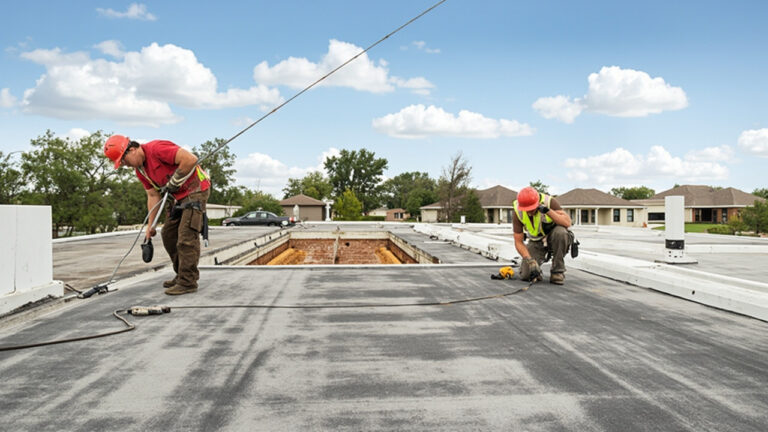
A thorough property manager roof inspection should be conducted at least twice a year—typically in the spring and fall—to prepare for and recover from the most extreme weather seasons. Below are the critical areas that every DFW property manager should monitor to maintain a healthy roofing system.
- Surface Condition and Membrane Integrity: Look for signs of blistering, cracking, or punctures in the roofing membrane. In DFW, UV degradation is a major factor for TPO and EPDM roofs. Ensure that the surface is free of debris that could trap moisture or cause physical damage.
- Drainage Systems and Scuppers: Clogged drains are a leading cause of ponding water, which adds significant weight to the structure and accelerates membrane failure. Ensure all gutters, downspouts, and scuppers are clear of leaves, silt, and trash.
- Flashing and Penetrations: Most leaks occur at the edges or where equipment penetrates the roof. Inspect the flashing around HVAC units, vents, and skylights. Check for gaps in sealant or signs of rust on metal components.
- Parapet Walls and Coping: Examine the masonry and metal caps on parapet walls. Cracks in the mortar or loose coping stones can allow water to infiltrate the building envelope behind the roofing system.
- Walkway Pads and High-Traffic Areas: If your roof sees frequent foot traffic from HVAC technicians or maintenance crews, ensure that walkway pads are in good condition and that no tools or heavy equipment have been left behind to damage the surface.
Understanding the financial implications of these inspections is vital for long-term planning. For more information on how to allocate funds for these tasks, refer to our guide on Commercial Roof Maintenance: What DFW Property Managers Should Budget For.
Why DFW Property Managers Prioritize Routine Inspections
In the Dallas-Fort Worth area, the environment is particularly harsh on commercial building materials. The combination of high wind speeds and large-diameter hail can compromise even the most durable roofing systems. A professional commercial roof inspection DFW provides the factual documentation necessary to understand the current state of your roof. This documentation is invaluable when planning for future capital expenditures or when you need to provide technical repair information to stakeholders. Best Roofer Solar provides detailed measurements, high-resolution photographs, and comprehensive estimates that allow property managers to see exactly what is happening on their rooftops without having to climb a ladder themselves.
Furthermore, consistent documentation serves as a historical record of the roof’s condition. If a major storm event occurs, having a recent inspection report establishes a baseline for the roof’s pre-storm state. This is especially important in North Texas, where hail is a frequent occurrence. For insights on what to look for after a significant weather event, you can review our hail damage roof inspection Fort Worth: documentation guide, which highlights the types of technical data that are most useful for property owners.
Technical Documentation and Construction Standards
When Best Roofer Solar performs an inspection, the focus is on providing a clear, technical scope of work. We provide property managers with professional repair documentation that outlines the specific materials and methods required to restore the roof to its optimal condition. This includes identifying specific areas of moisture infiltration, measuring the extent of wind uplift damage, and providing technical repair information that the property owner may choose to provide to an insurer if they seek coverage for storm damage. Our role is to provide the construction expertise and factual data needed to execute high-quality repairs that meet or exceed local building standards.
Proactive maintenance also extends the life of your existing roof, delaying the need for a full replacement. By identifying and repairing small leaks or failing seams early, you protect the insulation and decking beneath the membrane. This not only saves money on construction costs but also helps maintain the energy efficiency of the building, as wet insulation loses its R-value and increases cooling costs during the hot Texas summers.
Frequently Asked Questions
How often should a commercial roof in DFW be inspected?
It is generally recommended that commercial properties in North Texas undergo a professional inspection at least twice per year. The best times are in the spring, before the peak of hail season, and in the fall, to ensure the system is prepared for winter weather. Additionally, an inspection should be performed after any major storm involving high winds or hail.
What are the signs that a commercial roof needs immediate attention?
Property managers should look for interior water stains on ceilings or walls, persistent odors of mold or mildew, and sudden increases in energy bills. On the roof itself, standing water that remains 48 hours after a rain, visible tears in the membrane, or loose flashing around HVAC units are clear indicators that a professional assessment is required.
What documentation does Best Roofer Solar provide after an inspection?
We provide a comprehensive report that includes high-resolution photographs of any deficiencies, detailed measurements of the roof area, and a factual scope of work for necessary repairs. We also provide technical repair information and construction estimates that property managers can use for budgeting or to provide to their insurance carriers for factual documentation of the roof’s condition.
Ensure your property is protected against the unpredictable North Texas weather. Contact Best Roofer Solar today for a professional commercial roof inspection DFW. We provide the technical documentation and expert construction services you need to maintain your facility. Call us at 682-688-7727 or visit our commercial roofing page to schedule your FREE property/roof inspection.