
Identifying Subtle Hail Damage After a North Texas Storm
Living in the Dallas-Fort Worth metroplex means dealing with some of the most volatile weather in the country. From spring supercells to late-autumn cold fronts, hail is a regular visitor to our neighborhoods. While most homeowners know to look for missing shingles or large holes after a major storm, the reality is that hail damage is often far more subtle. These smaller, hidden issues can lead to significant leaks and structural problems if left unaddressed.
As a full-service general contractor, Best Roofer Solar understands that a roof is just one part of your home’s protective envelope. When we perform an inspection, we look at the entire property to ensure nothing is overlooked. Here are five signs of hail damage that DFW homeowners frequently miss during their own visual checks.
1. Excessive Granule Loss in Gutters
One of the most overlooked indicators of hail impact is what we call ‘sand’ in the gutters. Asphalt shingles are coated with ceramic-covered granules that protect the underlying bitumen from UV rays and provide fire resistance. When hail hits a shingle, it often dislodges these granules.
While a small amount of granule loss is normal as a roof ages, a heavy storm can accelerate this process significantly. If you notice piles of granules at the base of your downspouts or a thick layer of ‘sand’ inside your gutter troughs, it is a strong sign that your shingles have suffered impact damage. Without these granules, the sun’s harsh Texas heat will quickly bake the exposed asphalt, causing it to crack and fail prematurely.
2. Dents in ‘Soft Metals’
Homeowners often spend all their time looking at the shingles, but the metal components of your roof often tell a clearer story. We refer to these as ‘soft metals,’ and they include your attic vents (whirlybirds or box vents), chimney flashing, and valley tins. Because these materials are thinner and more malleable than shingles, they show impact marks much more clearly.
If you see small, round dings or ‘pockmarks’ on your metal vents, it is a near-certainty that the shingles were hit with the same force. Even if the shingles look okay from the ground, these dents provide the physical evidence needed to understand the storm’s intensity. As a full-service contractor, we document these collateral damages thoroughly in our inspection reports.
3. The ‘Bruise’ on the Shingle
Unlike a rock hitting a windshield, hail damage on a shingle doesn’t always result in a clean break. Often, it creates what pros call a ‘bruise.’ To the untrained eye, this might just look like a dark spot or a slightly discolored area. However, when you feel the spot, it will often be soft to the touch, similar to a bruise on an apple.
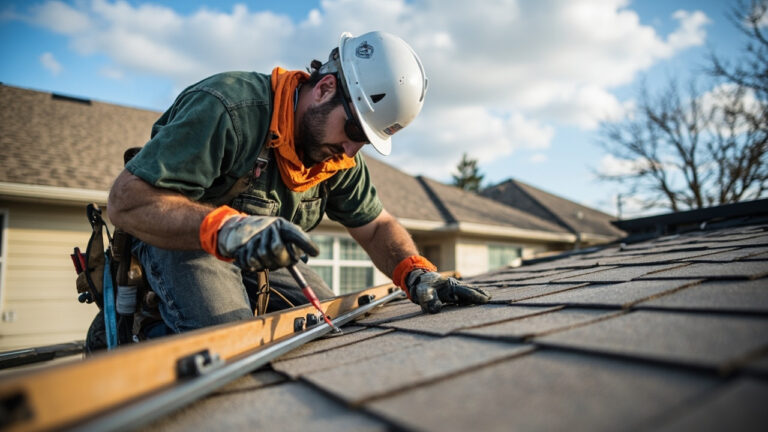
This softness indicates that the internal fiberglass mat of the shingle has been fractured. Once that mat is broken, the shingle loses its structural integrity. Over time, water will seep through this fracture, eventually reaching the decking below. Because these bruises are hard to see from the ground, a professional rooftop inspection is essential to catch them before they turn into an emergency roof repair situation.
4. Damage to Window Screens and Siding
When assessing hail damage, it is important to look at the house as a whole. Hail rarely falls perfectly vertical; it is usually driven by high North Texas winds. This means the sides of your home often take a beating as well. Check your window screens for small tears or ‘splatter’ marks where the hail hit. Look at your vinyl or fiber cement siding for cracks or chips.
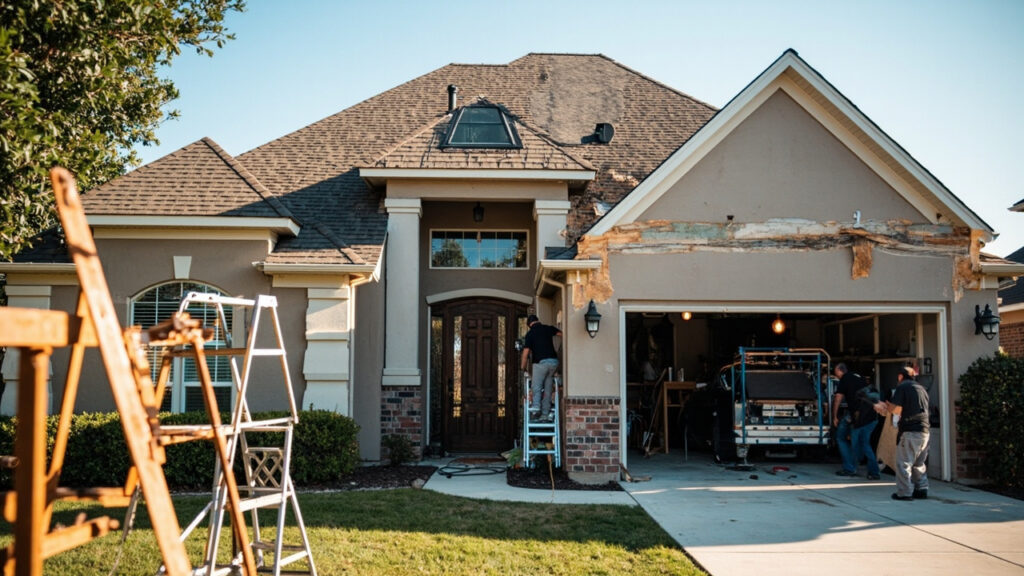
If your screens are torn or your siding is dented, the roof above them was likely subjected to the same conditions. As a general contractor, we don’t just stop at the roofline. We evaluate the entire exterior to provide you with a complete picture of your home’s condition after a storm.
5. Cracks in Plastic Roof Components
Modern roofs use various plastic components, including pipe boots (the seals around your plumbing vents) and certain types of ridge vents. Over time, the DFW sun makes these plastic parts brittle. When hail strikes these weathered components, it can cause hairline cracks that are nearly invisible from a distance.
These cracks are notorious for causing ‘mystery leaks’—leaks that only appear during heavy, wind-driven rain. During our inspections, we carefully examine every penetration and vent to ensure the seals are intact and the plastic hasn’t been compromised by impact.
Why a Professional Inspection Matters
Identifying hail damage is about more than just finding holes; it’s about documenting the long-term viability of your home’s exterior. At Best Roofer Solar, we take a methodical approach to every inspection. We document all findings with high-resolution photos and provide a written, itemized inspection report. This professional documentation is yours to keep, and you can use it to support your own claim, filed on your own terms with your insurance provider.
We pride ourselves on being a full-service partner for DFW homeowners. Whether you need a simple shingle replacement, gutter repair, or a full exterior restoration, we have the expertise to handle the job correctly. We don’t just ‘fix roofs’—we restore homes.
Don’t wait for a leak to tell you that your roof is damaged. If a storm has recently moved through your neighborhood, it is wise to get a professional opinion. Contact Best Roofer Solar today at 682-688-7727 or visit our emergency roof repair page to schedule your FREE, no-obligation inspection. Let us provide the clear, honest documentation you need to protect your DFW home.